Cataract surgery today is nothing like what your parents experienced. Powered by the Zeiss Quatera 700 — the most advanced phacoemulsification platform in India — we restore your vision through a micro-incision so small it seals itself, with no stitches and no patch.
A cataract forms when the natural lens of your eye gradually becomes opaque — like a window that slowly frosts over. Light can no longer pass through cleanly, leading to blurry vision that no glasses can correct.
The good news: cataracts are completely curable. Surgery takes about 10 minutes, requires no injections around the eye, and you can return home the same day with improved vision that often surprises patients the very next morning.
SYMPTOMS THAT SUGGEST A CATARACT
We walk with you through every step. No surprises, no confusion — just a clear path from your first visit to waking up with better eyesight.
We perform two types of cataract surgery. Your surgeon will recommend the most appropriate approach based on your cataract grade, pupil size, and overall eye health.
The gold standard in modern cataract surgery — no stitches, faster healing, and compatible with all premium lens implants.
"The cloudy lens is broken up by ultrasound energy and removed through an opening smaller than 2.4 mm — so small it heals on its own."
A proven, time-tested technique for advanced cataracts or cases where phacoemulsification is not advisable.
For patients with both cataract and glaucoma, we perform simultaneous procedures to address both conditions in a single operation.
The artificial lens implanted during surgery determines what you'll be able to see after. We offer every major lens category, from basic distance-correction to premium glasses-free options — and we'll help you choose the right one for your life, not just your eyes.
Lens choice depends on your lifestyle, the health of your cornea and retina, and your personal vision goals. Your surgeon will discuss every option with you in detail at the pre-operative consultation.
Toric variants of all the above lens families are also available for patients with astigmatism. Your surgeon will assess your corneal curvature and recommend accordingly.
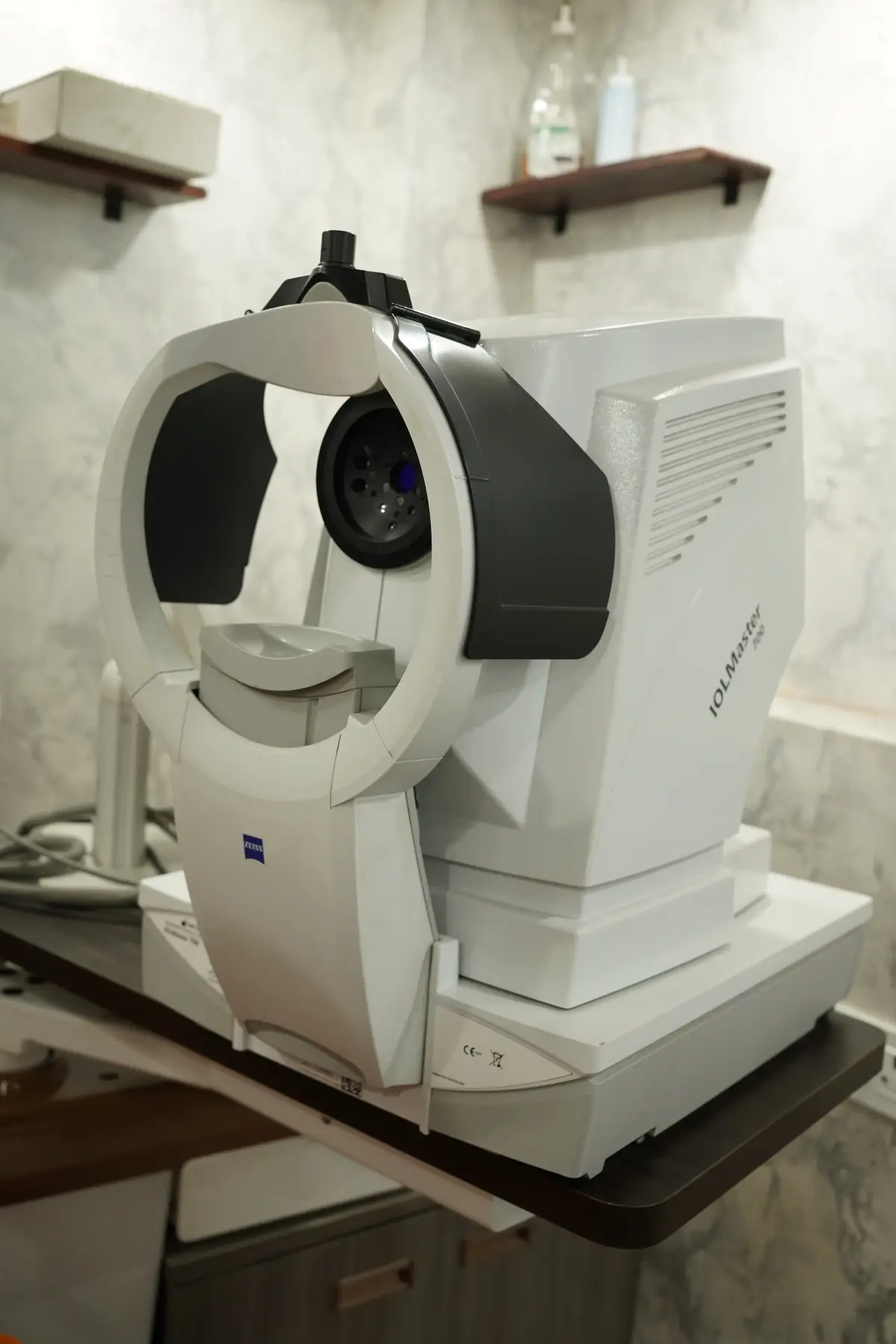
We operate a fully integrated Zeiss ecosystem. Every piece of data collected before surgery feeds seamlessly into the operating room — ensuring your IOL power is calculated with sub-micron precision and executed with robotic-level consistency.
The founding surgeon of Madhavi Netralaya, Dr. Kanhaiya Singh has dedicated over 25 years to providing accessible, honest eye care for the people of Bhojpur. He has performed thousands of cataract procedures and built this institution on a simple principle: every patient deserves the same respect and surgical care, regardless of means.
Fellowship-trained at India's premier eye institutes in Coimbatore and Kolkata, Dr. Nilesh Kumar returned to his home district of Bhojpur with a clear mission: to deliver the surgical precision of top metropolitan hospitals right here in Ara. He has performed thousands of cataract procedures across all complexity levels — from routine phacoemulsification to complex cases involving small pupils, pseudoexfoliation, dense cataracts, and combined cataract-glaucoma surgeries. He oversees the entire Zeiss surgical workflow at Madhavi Netralaya and personally discusses lens selection with every patient.
No. We use anaesthetic eye drops — no injections around or behind the eye. You will feel slight pressure during the procedure but no pain. Most patients are surprised by how comfortable and quick it is.
The procedure itself takes approximately 10 minutes. You will spend around 2–3 hours at the hospital total for preparation, surgery, and a short recovery observation period before going home.
Typically, we operate on one eye at a time, allowing the first eye to stabilise and giving you functional vision during recovery. The second eye is usually done 1–2 weeks later, once the surgeon confirms the first is healing well.
Many patients notice improved brightness and clarity the very next morning. Vision continues to stabilise over 4–6 weeks. A final spectacle prescription is given after the eye has fully settled.
This depends on the lens you choose. With a Monofocal IOL, you will likely need reading glasses. With a premium Trifocal or EDoF lens, most patients achieve functional independence from glasses for most daily activities.
Yes. The intraocular lens is designed to remain in your eye for life. It does not wear out, does not need replacement, and cannot be felt. Once it is in, you never need to think about it again.
In some patients (roughly 10–20%), the thin membrane behind the IOL can become cloudy months or years after surgery — called Posterior Capsule Opacification. A simple, painless 5-minute laser procedure (YAG capsulotomy) instantly clears this. It is not a complication of the surgery itself.
No. Cataract surgery at Madhavi Netralaya is a day-care procedure. You arrive in the morning, have your surgery, rest briefly, and return home the same day. No overnight stay is required.
Our cataract work-up is a comprehensive evaluation — optical biometry, baseline OCT, corneal topography, and a one-on-one discussion with Dr. Nilesh Kumar about the best lens option for your vision goals. No pressure, no rush.
Or call: 1800-571-9090 (24/7 · Toll Free)