The cornea is the clear front surface of your eye — your eye's most powerful focusing lens, and its first line of defence. Injury, infection, irregular shape, or degenerative disease can cloud that clarity. We diagnose and treat the full spectrum of corneal conditions.

The cornea provides approximately 65–75% of your eye's total focusing power — yet most people have never heard of it until something goes wrong. Unlike other eye structures, the cornea has no blood vessels; it depends on oxygen from the atmosphere and nourishment from tears. This makes it highly sensitive but also vulnerable to damage and disease.
The cornea is a transparent, dome-shaped tissue covering the front of the eye. It bends (refracts) light as it enters the eye, working together with the crystalline lens to focus images precisely on the retina. Any opacity, irregularity, or damage to the cornea can cause blurred vision, glare, photophobia (light sensitivity), or — in severe cases — significant visual impairment.
The cornea also acts as a physical and biological barrier against infection and trauma. The tear film that sits on its surface plays a critical role in maintaining corneal clarity, which is why dry eye disease and corneal disease are so often linked.
Corneal disease encompasses a wide range of conditions — each requiring a precise diagnosis and a targeted treatment approach. We manage all of the following at Madhavi Netralaya.
A progressive condition where the cornea thins and bulges forward into a cone shape, causing irregular astigmatism and progressively worsening vision that glasses cannot fully correct. Early detection and collagen cross-linking can halt progression permanently.
Treatable with CXL if caught earlyA triangular growth of conjunctival tissue that creeps onto the cornea, often triggered by chronic sun and dust exposure. When it encroaches on the visual axis or causes persistent irritation, surgical excision with amniotic membrane or autograft is recommended.
Surgical excision availableAn open sore on the cornea — most commonly caused by bacterial, viral, or fungal infection. Contact lens wearers are at elevated risk. Requires urgent debridement, intensive antibiotic or antifungal therapy, and close monitoring. Delayed treatment can lead to permanent scarring.
Ophthalmic emergencyScarring from prior infection, trauma, or surgery can cause permanent haze or opacity affecting vision. Early cases may be managed with treatment; dense central opacities affecting vision significantly may ultimately require corneal transplantation (referral available).
Assessment & referralPatients with prior corneal abrasion or dystrophy may experience repeated episodes of spontaneous epithelial breakdown — typically waking with severe pain and watering. Managed with bandage contact lens, lubricants, and superficial keratectomy where indicated.
Chronic condition managementIn severe corneal infections that do not respond adequately to medication, accelerated Collagen Cross-Linking can be used as an adjunctive treatment to halt the enzymatic melting of corneal stroma by microbial collagenases — a potentially sight-saving intervention.
Adjunctive CXL availableCollagen Cross-Linking (CXL) is the only proven treatment that permanently halts keratoconus progression. UV-A light activates Riboflavin (Vitamin B2) drops applied to the cornea, triggering a photochemical reaction that stiffens the corneal collagen fibres — arresting the forward bulging before it worsens further.
CXL does not improve existing vision — it preserves what you currently have. This is why early detection of keratoconus is so important: the sooner treatment is performed, the more visual function is preserved for life.
All procedures are performed under appropriate local anaesthesia by our experienced clinical team. Package pricing includes all standard consumables — please ask at the front desk for details.
| Procedure | Technique | Notes |
|---|---|---|
Pterygium Excision with Autograft Suture technique | Excision + conjunctival autograft from same eye | Gold standard. Lowest recurrence rate. Best cosmetic result. |
Pterygium Excision with Dry Amniotic Membrane Suture technique | Excision + dried amniotic membrane graft | Good option when autograft tissue is limited |
Pterygium Excision with Wet Amniotic Membrane Suture technique | Excision + fresh/wet amniotic membrane | Enhanced healing. Suitable for larger pterygia |
Fibrin Glue Pterygium Excision Sutureless | Any of the above with fibrin tissue adhesive instead of sutures | Shorter procedure. Less postoperative discomfort. Premium option. |
Corneal Ulcer Debridement + Intrastromal Antibiotics | Scraping + direct injection of antibiotics into corneal stroma | Medicines for injection charged separately |
Bandage Contact Lens | Monthly soft BCL applied as therapeutic cover | For epithelial defects, erosions, post-surgical protection |
Glued BCL (Cyanoacrylate) | Contact lens bonded to cornea with tissue adhesive | For small corneal perforations and persistent epithelial defects |
Corneal Tear Repair | Microsurgical closure with fine nylon sutures under microscope | Without any other additional ocular damage. Emergency repair. |
Corneo-Scleral Repair | Extended microsurgical closure across cornea and sclera | For lacerations extending posterior to limbus |
Conjunctival Mass Removal | Excision of conjunctival lesion with primary closure or graft | Tissue sent for histopathology when indicated |
Collagen Cross-Linking — Keratoconus Per eye | Standard Dresden protocol with Riboflavin + UV-A irradiation | Early-to-moderate keratoconus. Vision stabilisation — not improvement. |
Collagen Cross-Linking — Microbial Keratitis Per eye | Accelerated CXL as adjunct to antibiotic therapy | For resistant ulcers with stromal melting. Adjunctive treatment. |
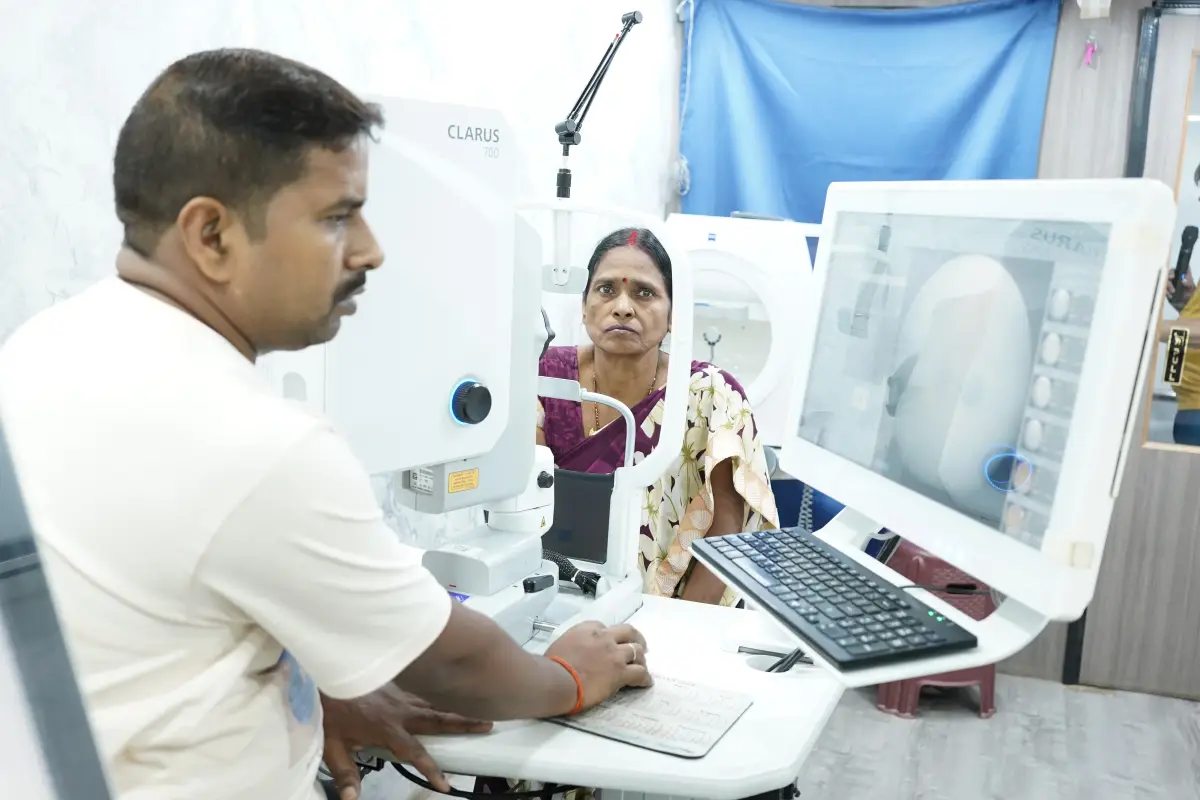
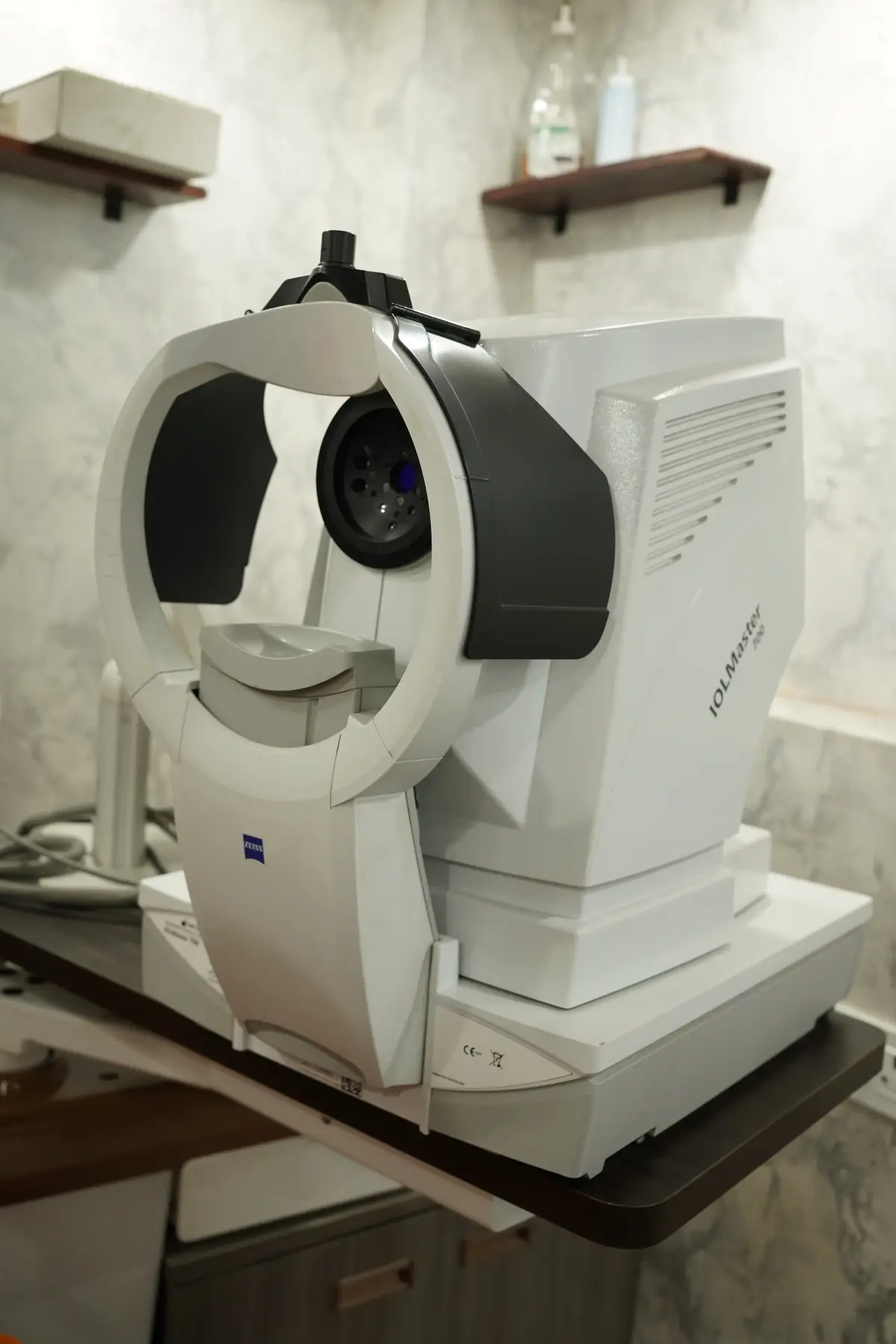
Accurate corneal diagnosis requires both structural imaging and functional mapping. Our cornea diagnostic suite delivers both.
CXL does not reverse keratoconus — it halts its progression. Most patients maintain stable corneal shape for years or decades after a single treatment. Patients who undergo CXL early in the disease typically preserve more functional vision long-term. Once stable, glasses or contact lenses can address residual refractive error.
A small, stable pterygium that does not affect vision or cause symptoms can be monitored safely. However, if it grows toward the visual centre of the cornea, causes increasing astigmatism, produces persistent redness and irritation, or is cosmetically distressing, surgical excision is recommended.
Contact lens wearers have a significantly elevated risk of Acanthamoeba keratitis and bacterial keratitis, particularly if lenses are worn overnight, used beyond their recommended duration, or stored in tap water. Any sudden eye pain, redness, or blurred vision in a contact lens wearer should be treated as an emergency.
Most patients are comfortable for light activities within 1–2 weeks. The eye may appear red and feel gritty for several weeks while the grafted tissue settles. Vision typically stabilises at 4–6 weeks, at which point a final spectacle prescription can be given.
Superficial corneal scars can sometimes be partially treated with excimer laser (PTK — phototherapeutic keratectomy). Dense, deep scars affecting central vision may ultimately require corneal transplantation. We assess each case individually and refer for transplantation where appropriate.
Yes — frequent and progressive change in glasses power in a teenager or young adult, particularly if it is asymmetric between both eyes, is a warning sign for keratoconus. Corneal topography will confirm or rule it out definitively. We recommend screening without delay, as CXL is most effective when performed before significant corneal thinning has occurred.
Whether it's a routine keratoconus screening, a red and painful eye that needs urgent review, or a pterygium that's been bothering you for years — our cornea clinic is ready. Same-day emergency appointments available.
Emergency: 1800-571-9090 (24/7)